
Why Your Hair Routine Should Change With Colorado Weather
We change our clothes with the season.
We change our skin care.
We change the temperature in the house.
And yet many people use the exact same hair and scalp routine twelve months a year.
I don’t think that always makes sense.
Colorado can be especially unforgiving because the air is dry, temperature changes can be abrupt, and hair may already be dealing with color, heat styling, extensions, toppers or hormonal changes.
That is why I want to bring more seasonal customization into the way we think about scalp and hair care.
Not as a medical hair-loss treatment.
As professional cosmetic care that responds to what the scalp and hair are actually doing.
The scalp and hair do not always need the same thing
One of the biggest mistakes I see is assuming:
Dry hair = oily products everywhere.
Or:
Oily scalp = harsh cleansing everywhere.
The scalp and hair lengths can behave very differently.
You may have:
- An oily scalp and dry ends
- A dry scalp and color-treated hair
- Product buildup around an integration system
- Fragile lengths with a scalp that still needs thorough cleansing
- A topper that requires different care from the biological hair underneath
That is why I prefer to evaluate the scalp and hair separately.
FALL: RESET
Fall is a transition season.
After summer, the hair may be dealing with:
- Sun exposure
- Heat styling
- Mineral or pool exposure
- Product buildup
- Faded color
- Dry ends
- Seasonal routine changes
This is a good time to reassess cleansing, conditioning and color.
For some clients that means a clarifying reset followed by intentional moisture.
For others it means pulling back because the scalp is already feeling dry or reactive.
Fall goals
Scalp: clean without stripping.
Hair: restore softness and manageability.
Color: refresh tone without automatically over-processing.
Extensions/topper: inspect buildup and maintenance needs.
Thinning hair: reduce unnecessary breakage and tension.
WINTER: PROTECT
Winter often shifts the conversation toward dryness and mechanical damage.
Indoor heating and dry air can leave the hair feeling rougher, more static-prone and easier to break.
That is when I begin prioritizing:
- Consistent conditioning
- Gentler detangling
- Less aggressive heat styling
- Moisture appropriate to the hair type
- Protecting fragile ends
- Monitoring scalp comfort
The AAD recommends gentle handling when someone is experiencing hair loss, including reducing excessive heat and avoiding styling practices that create unnecessary damage.

American Academy of Dermatology
For women already noticing thinning, that becomes even more important.
SPRING: REASSESS
Spring is a good time for evaluation.
Has density changed over the winter?
Is color too dark or heavy?
Has buildup increased?
Does the home-care routine still make sense?
Is a topper or integration system due for a deeper maintenance review?
This is when I want to look at what worked and what did not.
Seasonal care should not just mean buying new products.
It should mean making better decisions.
SUMMER: DEFEND
Summer shifts us back toward sun, heat, sweat, travel and water exposure.
Color-treated hair may fade faster.
Hairpieces and extensions may require more intentional maintenance.
Sweat and scalp oils can change how often the scalp feels it needs cleansing.
Sun exposure can contribute to dryness and fading in color-treated hair. The AAD specifically recommends protecting colored hair from excessive sun exposure because it can become weaker, drier and more brittle.
American Academy of Dermatology
So summer care becomes less about piling on moisture and more about balancing cleansing, protection and maintenance.
Where custom blends fit
When I say custom seasonal blend, I am not talking about a medical formulation.
I mean selecting professional products and care steps based on what I am seeing.
That may involve:
- Cleansing level
- Conditioning intensity
- Scalp-compatible serum
- Hair masque
- Leave-in support
- Color protection
- Lightweight or richer oils
- Professional scalp-care products
- Specific care for extensions or hairpieces
The exact combination changes because the client changes.
Thinning hair requires restraint
A client experiencing hair loss may be tempted to do everything at once.
Scrub harder.
Use more oils.
Buy every serum.
Stop shampooing.
Add supplements.
Try scalp devices.
That can make it very difficult to know what is actually helping.
The AAD advises people experiencing hair loss to get an appropriate diagnosis rather than relying only on products marketed for regrowth, because many causes require different treatment.
American Academy of Dermatology
That is why I prefer a simple routine we can evaluate.
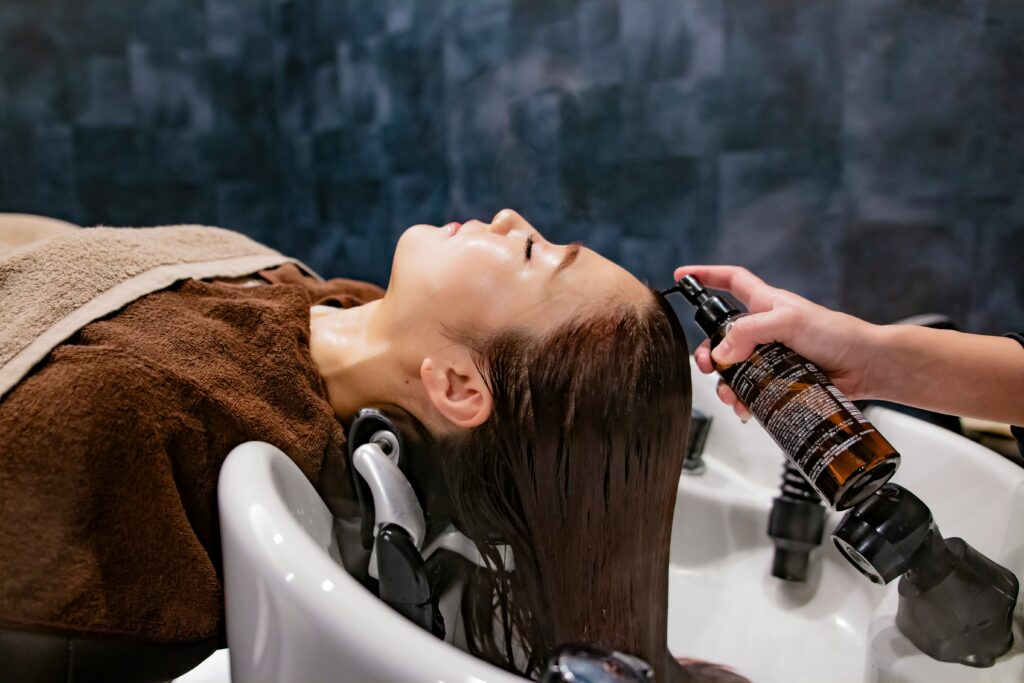
Seasonal scalp care and Head Spa
This is also where Head Spa by Beauty Bar can complement what we do at Shear Underground.
A Head Spa experience may support cosmetic scalp cleansing, relaxation, hydration and professional observation within its non-medical scope.
Shear Underground remains the salon/hair-restoration authority.
Head Spa remains a separate complementary service.
That distinction matters.
The goal is not to turn every scalp concern into a Head Spa appointment.
The goal is to refer when the experience actually makes sense for the client.
Hair loss does not mean over-treating the scalp
More is not always better.
More stimulation is not automatically better.
More exfoliation is not automatically better.
More product is not automatically better.
If the scalp is painful, inflamed, visibly diseased, severely irritated or changing rapidly, that is not the time for aggressive salon scalp care.
That is the time to involve a medical professional.
Build a routine you can actually maintain
The best seasonal hair plan should be simple enough to follow.
That may mean:
ONE CLEANSER
ONE CONDITIONING STRATEGY
ONE LEAVE-IN
ONE SCALP PRODUCT
ONE WEEKLY TREATMENT
when appropriate.
Not a bathroom full of products you use twice.
My seasonal rule
At each seasonal transition, ask:
What changed?
Did the scalp get drier?
Did the hair become more brittle?
Did shedding increase?
Did color fade faster?
Did extension maintenance become harder?
Did the topper require more frequent care?
Then adjust.